Retail relationships
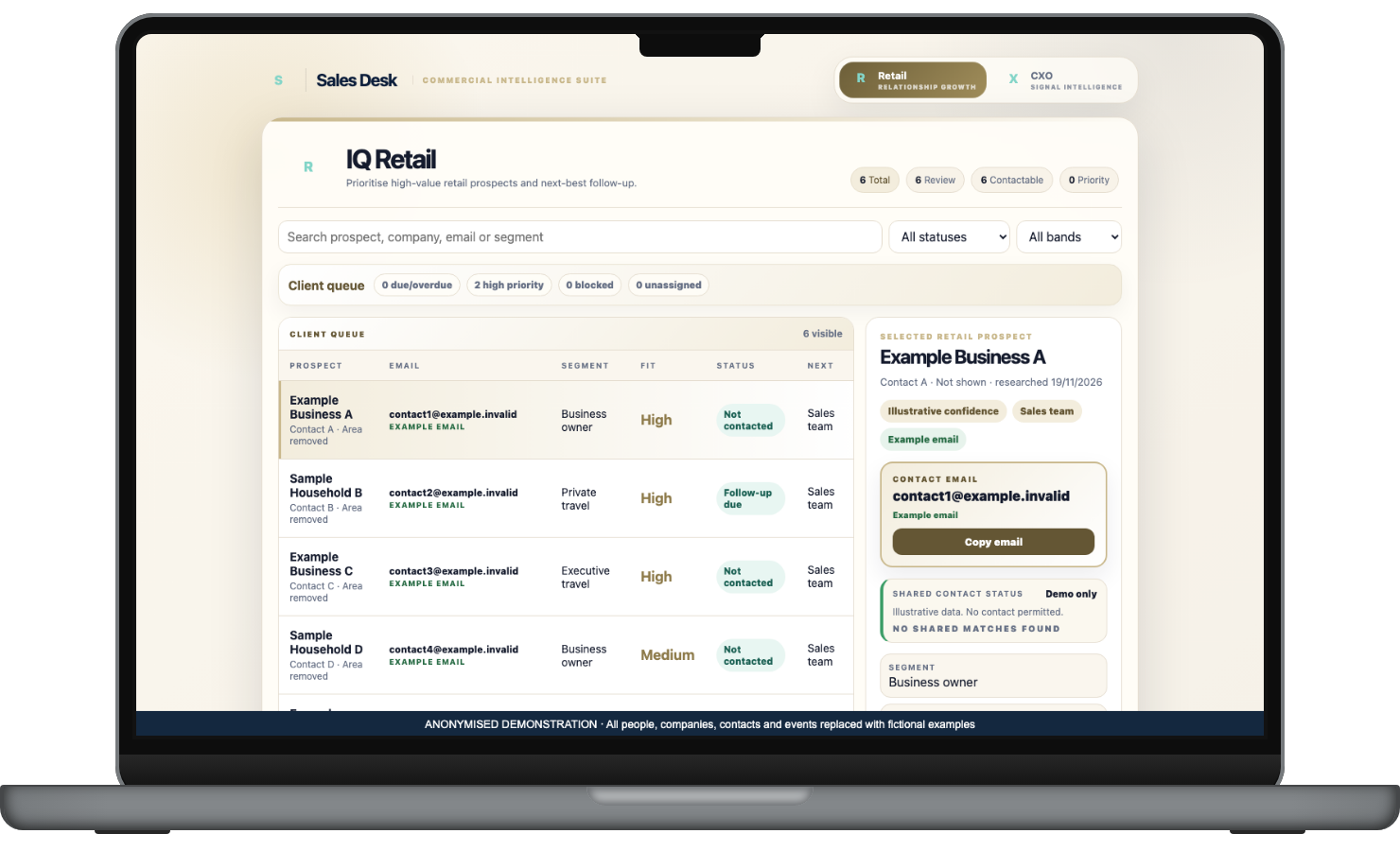
A focused prospect queue, useful personal context and an opening draft.
 View full-size example
The three things your sales desk brings together: lead fit, buying signals and a draft you can make your own.
Real interfaces, fictional replacement data. Every name, company, contact and event shown below has been replaced before capture. These demonstrations explain the workflow, not customer results.
A relevant company is a better starting point than a long, unfiltered list. Your desk explains how each prospect connects to your offer.
The company profile, target market, service match and a plain-English reason for the fit. A score is a way to sort the research, not a probability of winning the work.
Check the fit, choose where to spend your time and ask about the gaps. A promising company can still have the wrong requirements or no current need.
A components importer may fit a general-cargo freight offer. You still need to qualify the route, shipment volume and terms.
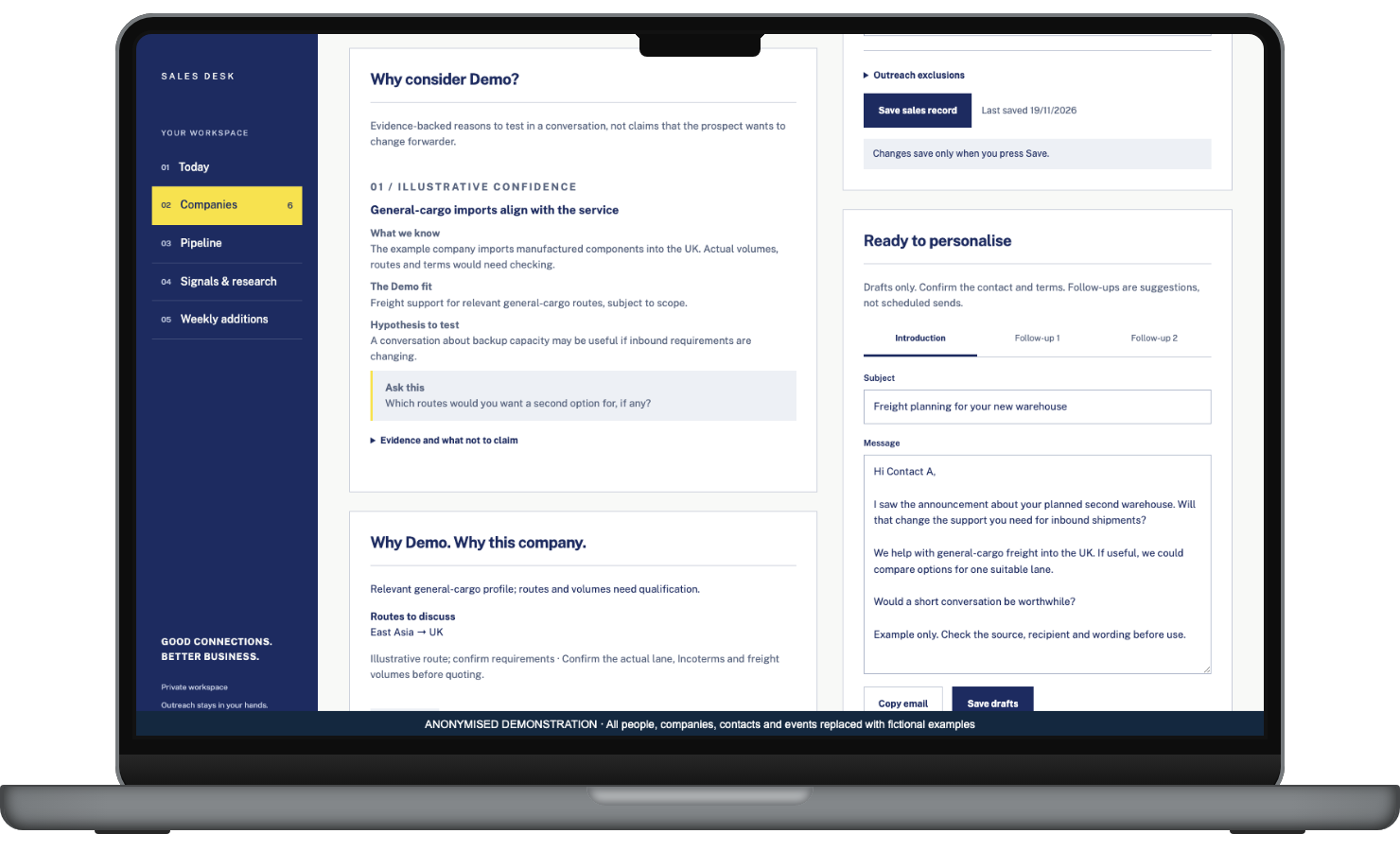
An enlarged crop from the same interface. All records are fictional replacements.
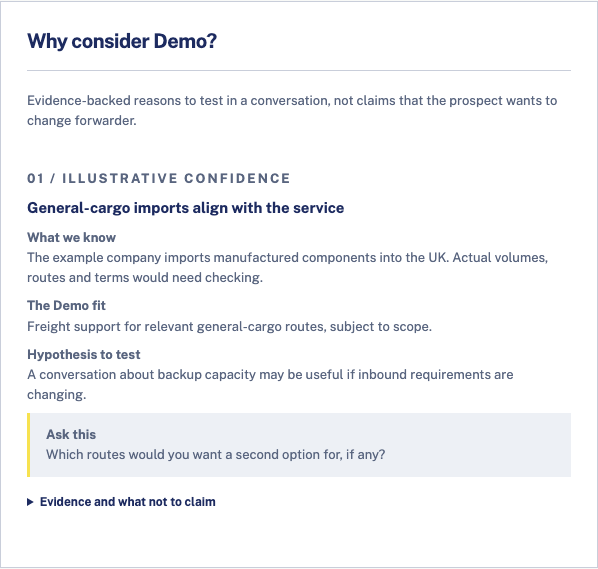
Good fit does not mean “ready to buy”. The desk keeps assumptions separate from established facts.
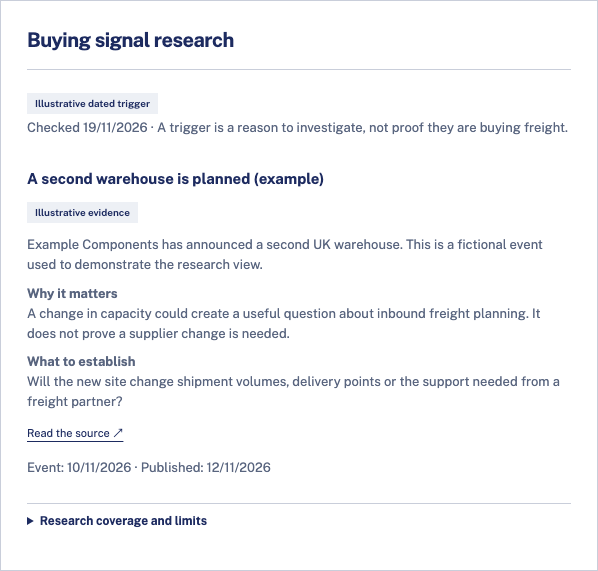
A business change can create a useful reason to start a conversation. The desk shows the evidence behind that timing.
The event, its source, publication and event dates, why it could matter and a question to qualify it. Old context and missing evidence should never look like a fresh trigger.
Read the source and check the connection to your service. Use the signal to ask a relevant question, not to assume a budget, buying decision or unhappy supplier.
A planned warehouse expansion could change inbound freight needs. Ask whether the new site changes their routes or capacity requirements.
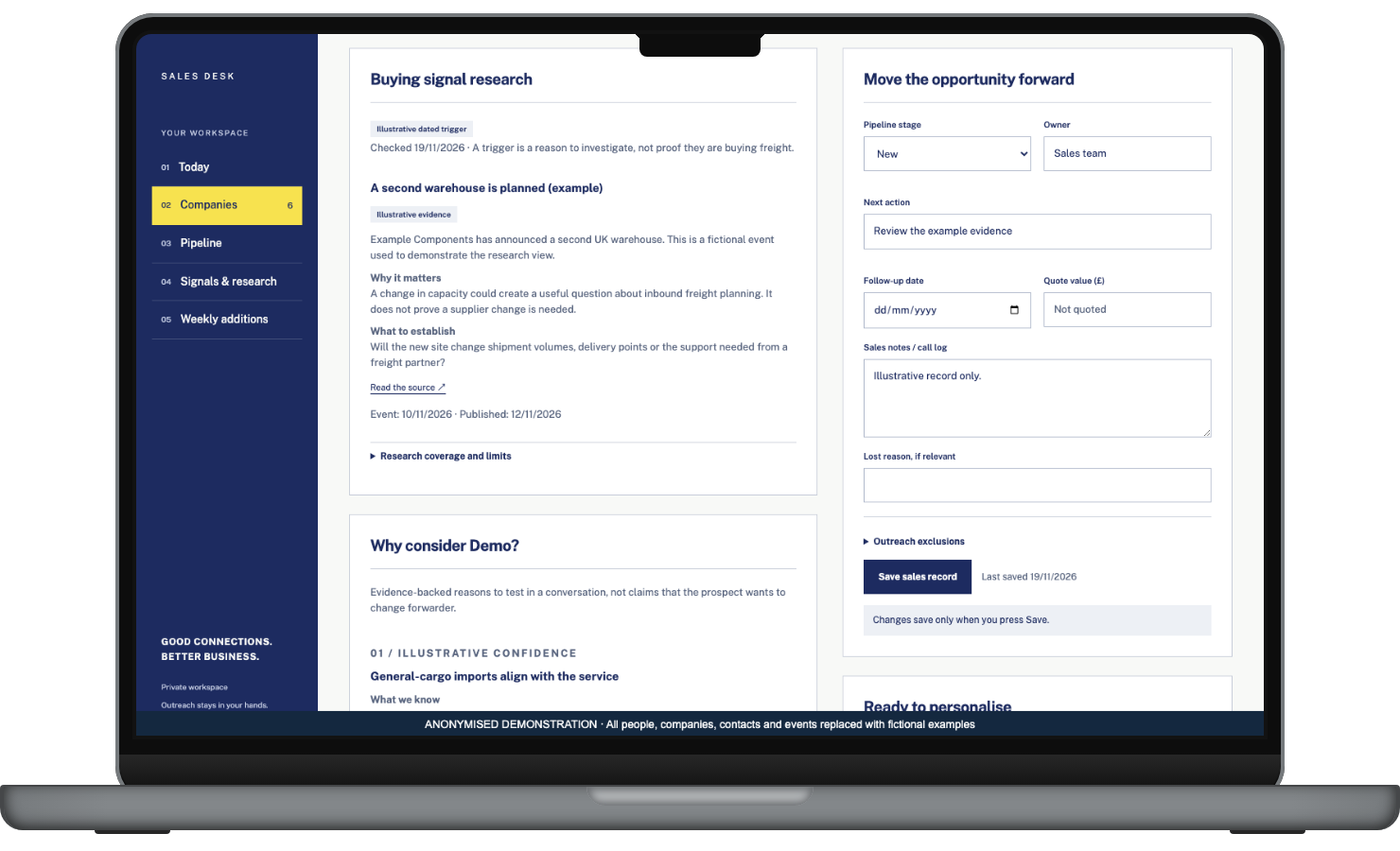
An enlarged crop from the same interface. All records are fictional replacements.
No defensible signal? We say so. An account can be a good fit without a reason to approach it today.
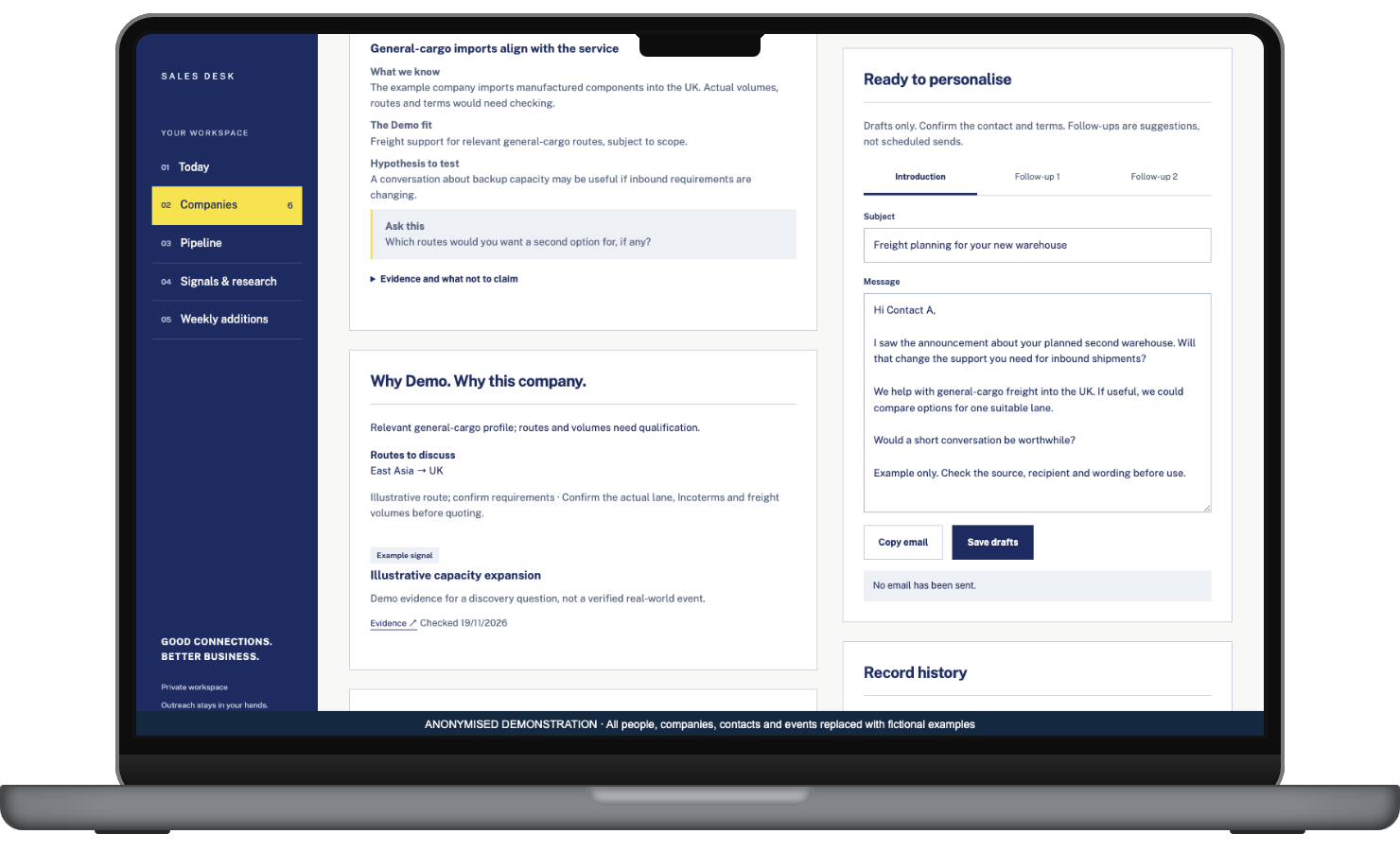
Start with a message built around the fit and the evidence, plus follow-up drafts you can adapt. Your judgement stays in the loop.
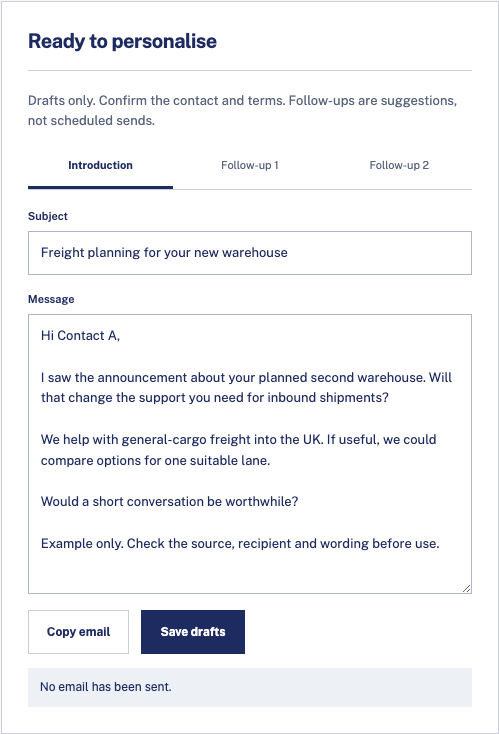
A subject line, a relevant opening and a clear question. Introduction and follow-up drafts sit beside the research so you can check the basis before using them.
Confirm the recipient and facts, edit the tone, then choose whether to send. Editing, copying or saving a draft does not send an email or schedule a follow-up.
“I saw the announcement about your planned second warehouse. Will that change the support you need for inbound shipments?”
An enlarged crop from the same interface. All records are fictional replacements.
No invented familiarity. No unsupported claims. No automatic sending. The example message is not outreach to a real person.
A focused prospect queue, useful personal context and an opening draft.
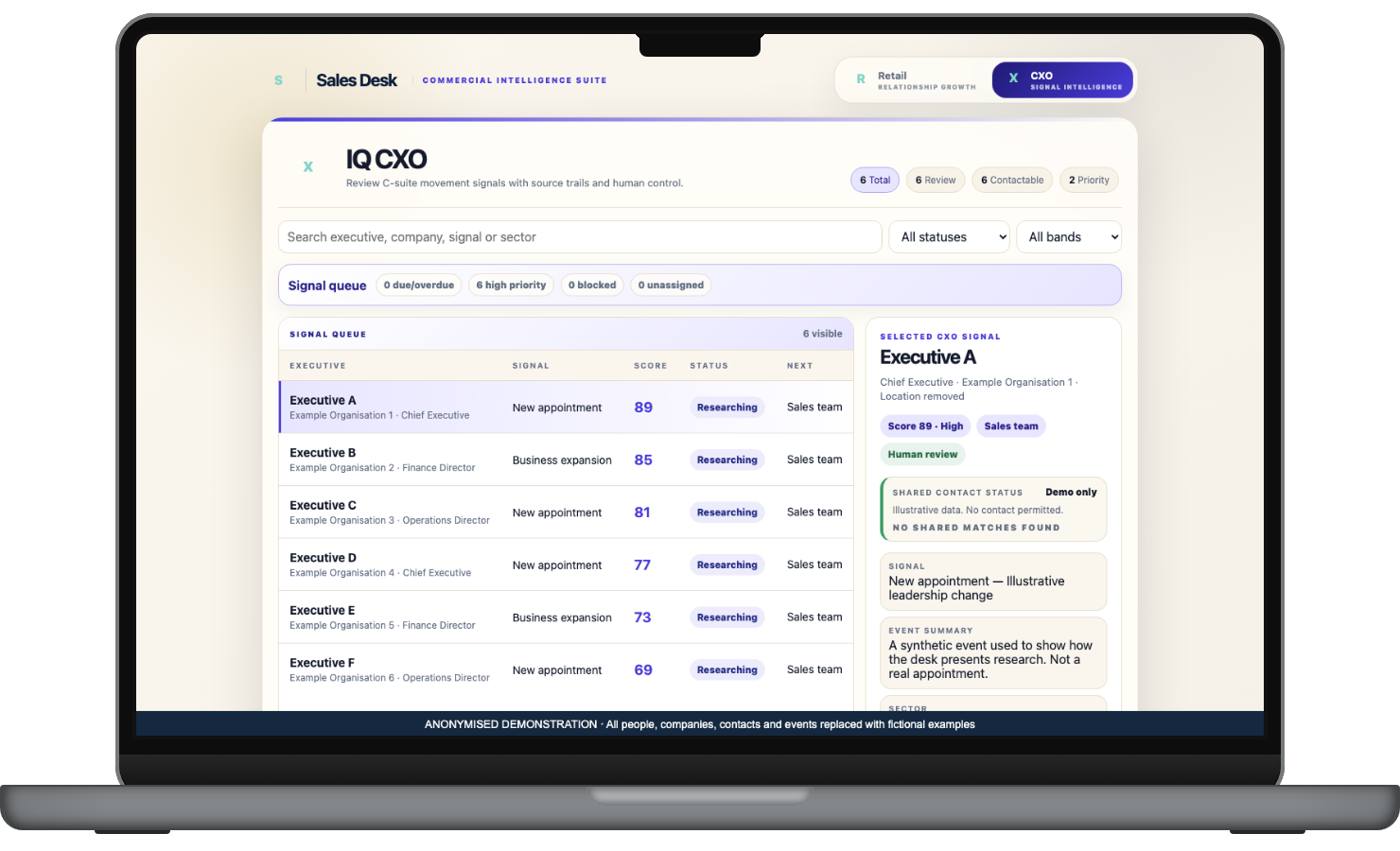
View full-size exampleLeadership changes and source trails, with a human reviewing the next step.
 View full-size example